





Infectious
A virus, bacterium or fungus sets off the inflammation.
Find the cause first, then treat the inflammation
Uveitis is inflammation of the uvea, the blood-rich middle layer of the eye. It can bring redness, pain, floaters and falling vision. At Sky Eye Clinic in Seoul, treatment starts by finding the cause, then uses drops, medication or surgery as your eye requires.
Inflammation left untreated for a long time can lead to cataract, retinal problems and glaucoma, and can end in blindness.
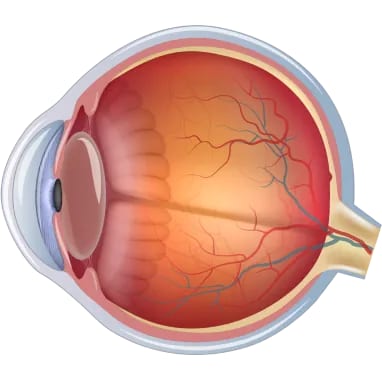
Picture the eye wall as three layers: the sclera outside, the retina inside, and in between the uvea, which is made up of the iris, the ciliary body and the choroid.
The uvea is packed with blood vessels and connective tissue, which is why it becomes inflamed easily.
A virus, bacterium or fungus sets off the inflammation.
The immune system reacts, in connection with autoimmune disease, a tumor, injury, surgery or degenerated tissue.
Which signs you get depends on how strong the inflammation is and what caused it.
The iris and the front of the ciliary body are inflamed. Sight is usually only mildly affected and can recover after treatment.
Typical signs: redness, light sensitivity, watering, pain, weaker vision.
The middle section, mainly the vitreous and the peripheral retina, is inflamed. It is mostly non-infectious and mainly affects teenagers and young adults.
Typical signs: floaters, mild to moderate vision loss.
The retina and choroid are inflamed and vision drops quickly. Swelling of the retina, especially macular edema, develops easily.
Typical signs: rapid vision loss, severe pain, floaters, altered colors, distortion.
The whole uvea is inflamed, the most serious form. It can occur with Behçet’s disease, Vogt-Koyanagi-Harada syndrome, multifocal choroiditis with panuveitis, and syphilis.
Typical signs: rapid vision loss, severe pain, floaters, distortion.
Your doctor prescribes an antibiotic, antifungal or antiviral that matches the cause.
Eye drops calm the inflammatory response, and steroids are introduced gradually as your condition requires.
When an autoimmune disease is behind the inflammation, your doctor adds systemic immunosuppressive therapy. For uveitis that keeps coming back, the biologic agent Humira is used.
Vitrectomy removes abnormal vessels and membranes from the retina.
It is considered for vitreous bleeding or clouding that does not clear, repeated bleeding, tractional detachment that threatens the macula or has a tear, severe bleeding at the macula, eyes that cannot be treated with laser, and new vessels growing on the iris.

Delayed treatment can bring complications, including glaucoma and retinal detachment. How quickly the inflammation settles differs from person to person.
Redness, light sensitivity, watering, weaker vision, floaters and distorted shapes are common. The exact mix depends on the type and cause.
Either an infection (viral, bacterial or fungal) or an immune reaction linked to autoimmune disease, a tumor, injury, surgery or degenerated tissue.
Panuveitis, in which the whole uvea is inflamed. It can occur with Behçet’s disease and Vogt-Koyanagi-Harada syndrome, among others.
Long-standing inflammation can cause cataract, retinal problems and glaucoma, and can lead to blindness.