





The retina and its center
Think of the retina as the film in a camera: it is what lets you tell colors and shapes apart. The macula sits at its center, where your focus lands.
When the center of your sight starts to fade
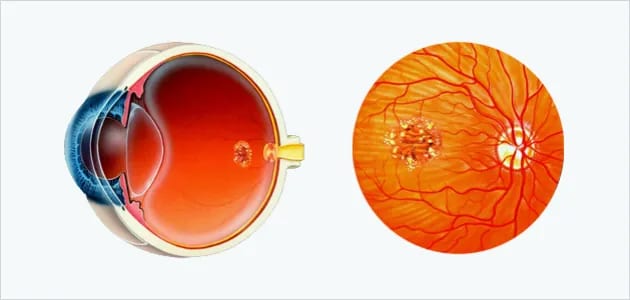
Macular degeneration is a change in the macula, the small central area of the retina where your sight focuses. It blurs reading and faces first. At Sky Eye Clinic in Seoul, the retina team checks whether yours is the dry or the wet form, then explains injection and laser options.
Early signs are faint and easy to put down to aging eyes, so an exam is the reliable way to know.
Think of the retina as the film in a camera: it is what lets you tell colors and shapes apart. The macula sits at its center, where your focus lands.
If the tissue of the macula changes and your vision suffers as a result, the condition is called macular degeneration. It is one of the conditions handled at our Retina Center.
As the retina gets older, the macula works less well. Risk climbs with the years, and the disease usually appears around 50.
Family history, eating habits, high blood pressure and other conditions can each play a part.
Damage to the retina from light, including ultraviolet rays, can also contribute.
Waste deposits called drusen collect in the retina and get in the way of oxygen and nutrients. Light-sensing cells are lost little by little, until the macula can no longer form a sharp image.
Dry disease can turn into the wet form, so it needs regular follow-up.
Abnormal new vessels grow up from the choroid beneath the retina. They swell, leak and bleed, and vision falls. Fewer people have this form, but once symptoms begin it moves quickly and, in severe cases, can lead to blindness.
An antibody that blocks new vessel growth is injected into the eye. The abnormal vessels shrink back while the light-sensing cells are left intact.
Injections can hold vision steady and may improve it, but they have to be repeated.
A light-sensitive drug is directed to the abnormal vessels in the choroid, so the laser seals only those vessels.
The goal is to slow or stop further loss. It is not designed to bring vision back.
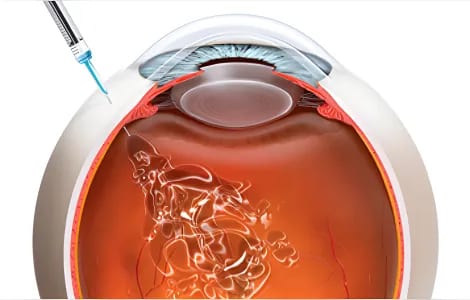
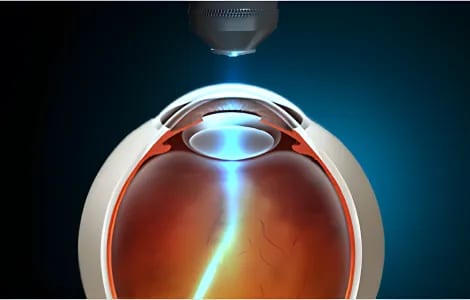
Which treatment fits, and how often it is repeated, depends on what your exam shows. Each eye responds differently.
Bent lines, broken letters or a dark spot in the middle of your view are reasons to see a retina specialist. Similar signs can come from diabetic retinopathy or retinal vascular disease.
In the dry form, drusen build up and light-sensing cells are lost slowly; it accounts for about 80% of cases. In the wet form, abnormal new vessels bleed and swell; it accounts for about 20%.
Yes. Early signs are subtle, and the two are easily mixed up. An eye exam separates them.
They make abnormal vessels regress, which can maintain and sometimes improve vision. Treatment has to be repeated.
Avoid direct sunlight and bright indoor light for about 48 hours, because the drug reacts to strong light.