



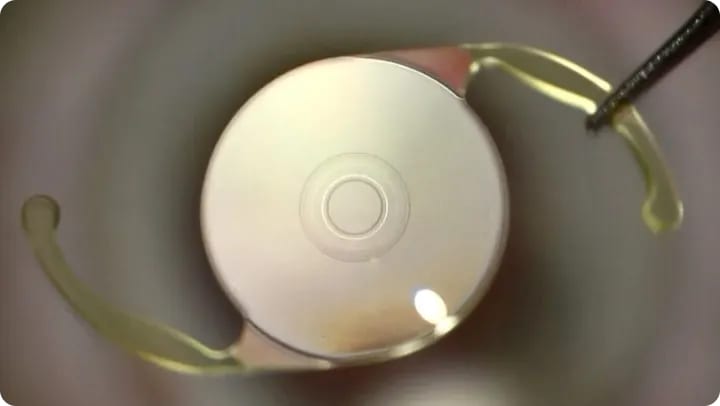
An intraocular lens positioned inside the eye after cataract surgery

Choosing your
cataract lens

The lens decides how you will see

An intraocular lens (IOL) replaces your cloudy natural lens, and its design decides how you see afterwards. Lenses fall into monofocal, multifocal and specialty groups.

Today’s lenses can do more than clear a cataract: some also correct presbyopia and astigmatism. We use lenses certified by the US FDA and European CE, chosen around your work, age and lifestyle.

Basics

Monofocal or multifocal?

Monofocal IOLMultifocal IOL
FocusOne essential distanceNear through far
Where sight improvesOnly at that distanceAcross distances
Reading glasses afterwardsNeededNot needed
Often suitsOlder adults who do little close workActive lives, such as night driving and sports

Which one fits depends on your eyes and your day. The measurements from your cataract tests are what your surgeon uses to recommend a lens.

Diffractive

Diffractive multifocal lenses

One surface carries dozens of tiny concentric steps. Light bends as it crosses them, creating several focal points.

LensMakerWhat it is designed for
SynergyJohnson & Johnson, released 2021Blends continuous focus with a multifocal design; filters the violet wavelength linked to glare; good contrast sensitivity at night.
Fine VisionPhysIOLTrifocal lens with a stable position in the eye; can correct corneal astigmatism during cataract surgery.
PanOptixAlcon (USA)Quadrifocal lens in a biocompatible hydrophobic material; delivers more light to the retina, aiming to reduce night glare and weaker near vision.
RayOneRaynerTrifocal lens inserted through a very small incision to limit astigmatism after surgery; surface designed to limit glare and halos.
Lisa TriCarl ZeissTrifocal lens that adjusts the light reaching the retina; very small incision; aims to limit night vision problems, halos and glare.
OdysseyJohnson & Johnson, released August 2025Higher light use and a smoothed surface to reduce night glare, with continuous near, intermediate and distance vision.
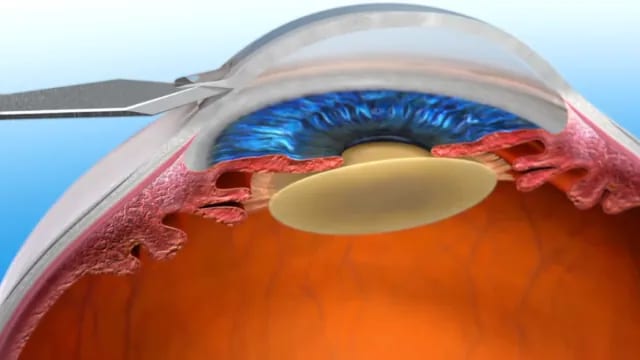
Cross-section of the eye showing where the intraocular lens sits
The new lens sits inside your natural lens capsule.
Other Designs

Refractive and specialty lenses

Refractive multifocal: Lentis M Plus

Instead of steps, this lens has zones with different focal lengths for near, intermediate and far.

It is less affected by pupil size and loses less distance light, which supports distance vision and reduces night glare. If you have had refractive surgery before, it is less affected than diffractive lenses.


Specialty: Vivity

Wavefront technology stretches the range of focus. With no rings to cause glare, it offers extended vision from far through intermediate to near.

Its main strengths are less glare than other lenses and strong distance-to-intermediate vision.

Your Visit

Questions to bring

Things your surgeon will weigh with you

  • How much close work you do, and whether you mind reading glasses.
  • Whether you drive at night or play sports.
  • Any earlier refractive surgery, such as LASIK or LASEK.
  • Astigmatism, and whether to correct it in the same operation.
  • Your exam findings and lens power measurements.
FAQ

About lens choice

How do monofocal and multifocal lenses differ?

A monofocal lens focuses on one essential distance, so reading glasses are needed afterwards. A multifocal lens covers near to far, so reading glasses are not needed.

Who is a monofocal lens suited to?

Older adults who do little close work. Multifocal lenses suit active lives, such as night driving and sports.

I had refractive surgery before. Which lens suits me?

Lentis M Plus, a refractive multifocal lens, is less affected than diffractive lenses after previous refractive surgery. Your surgeon makes the final choice.

Are the lenses certified?

We use lenses certified by the US FDA and European CE, and choose among them by your work, age and lifestyle.

Ask WhatsApp Instagram TikTok