





Remove the surface cells
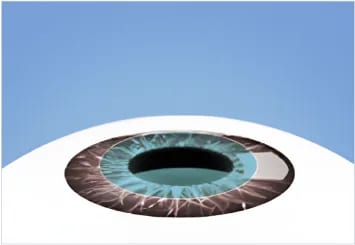
The uppermost layer of corneal cells is brushed away.
Surface laser, no flap
LASEK removes only the thin outer layer of corneal cells, about 50 micrometers, and applies the laser to the tissue beneath. No flap is cut.
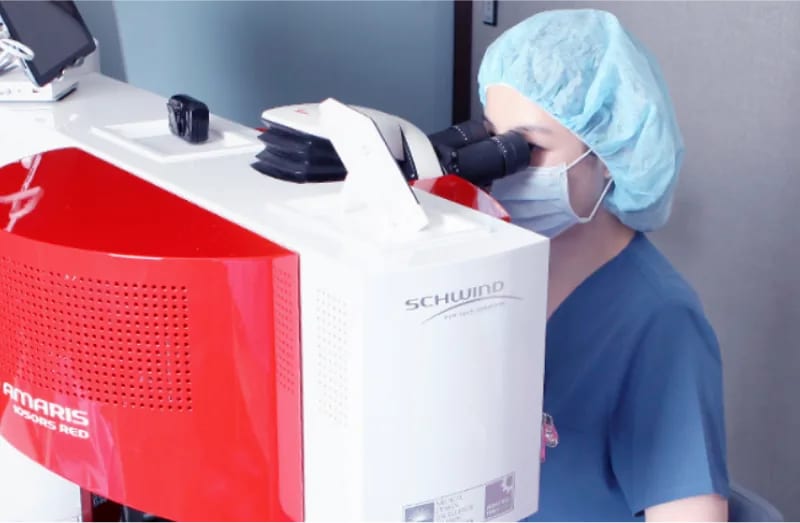
It is often the choice when LASIK would leave too little cornea. Sky Eye Clinic in Seoul offers standard, Amaris Red and 2Day all-laser LASEK.
LASEK (laser epithelial keratomileusis) was developed in 1999 and combines strengths of PRK and LASIK. The principle is the same as LASIK; only the way in differs.
The uppermost layer of corneal cells is brushed away.
The exposed stroma is reshaped to your prescription.
A high-water-content therapeutic lens eases pain while the epithelium grows back.
| Benefits | Drawbacks |
|---|---|
| Less pain and foreign-body feeling than older PRK, with less haze at the treated area | More pain than LASIK and slower recovery; blurring for 5 to 7 days |
| Vision can be corrected even when the cornea is too thin for LASIK | Mild to moderate foreign-body feeling for 2 to 3 days |
| Works for eyes too small for the microkeratome | Steroid drops are required, with eye-pressure checks |
| No flap, so no flap displacement once fully healed | Medication lasts longer; light sensitivity or glare may last weeks to months |
| Corneal haze may develop in high myopia |
Older LASEK used chemicals and surgical brushes to remove the epithelium, which damaged the cornea; the clinic says vision then took 1 to 2 months to recover. Amaris Red LASEK uses the laser for the epithelium step as well, and the clinic gives 2 to 4 weeks for vision recovery.
The Amaris Red laser fires at 1050Hz, tracks the eye in 7 dimensions, uses a 0.54mm spot and measures corneal thickness in real time. See the equipment page.
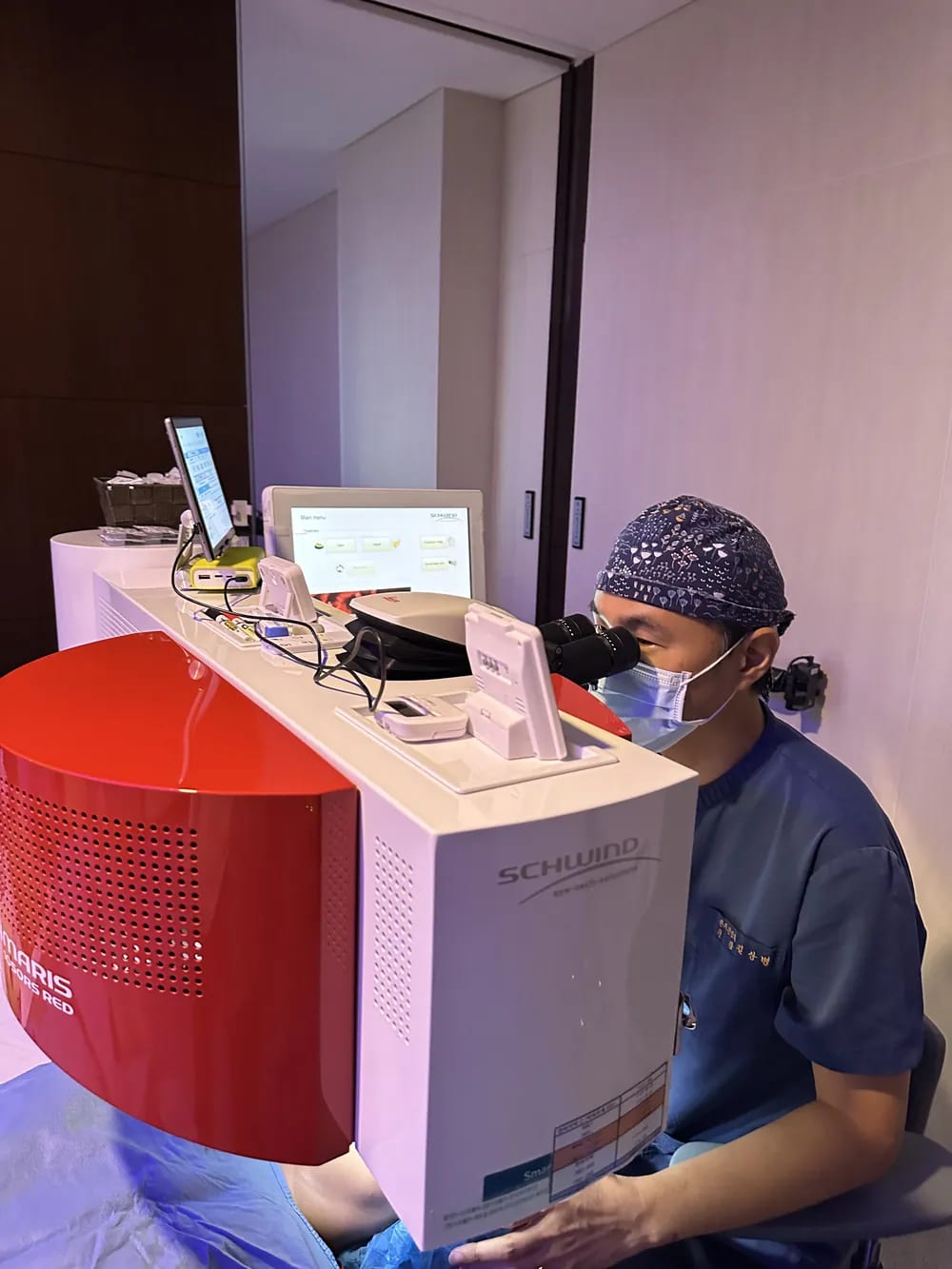
2Day LASEK removes the epithelium with the laser alone, with no chemicals or instruments. The clinic says this lowers infection risk, dry eye and pain, and uses less corneal tissue even in high myopia and astigmatism.
| Conventional LASEK | 2Day all-laser LASEK | |
|---|---|---|
| Epithelium removal | Alcohol and special instruments | Laser only |
| Dry eye after surgery | Minimal | Very minimal |
| Pain after surgery | 3 to 4 days | About 2 days (varies) |
| Corneal haze | Occurs in some patients | Almost none |
| Epithelium regrowth | 4 to 5 days | 2 to 3 days (varies) |
It is aimed at people who want faster recovery, fear pain or worry about dry eye. Co-Wave LASEK, which uses wavefront data to smooth the corneal surface, is also available; the LASIK page explains how Co-Wave works.
Fees are listed under LASEK cost in Korea. For international patients, the clinic lists fees at 49% off the regular rate, the same fee Korean patients pay, and adds a free MRI precision exam (worth KRW 100,000) and free autologous serum eye drops (worth KRW 200,000).
LASIK cuts a flap. LASEK removes only the surface cells, applies the laser and covers the eye with a protective lens. Recovery is slower, but it suits thinner corneas.
Blurring for 5 to 7 days and a mild to moderate foreign-body feeling for 2 to 3 days. Light sensitivity or glare may last weeks to months.
They are part of LASEK aftercare. Because they can raise eye pressure, you need regular check-ups while using them.
The laser removes the epithelium instead of chemicals or instruments. The clinic says this means less pain, dry eye and haze than conventional LASEK.