





Fading vision
Everything looks dim and hazy. It progresses slowly, so it is easy to miss at first.
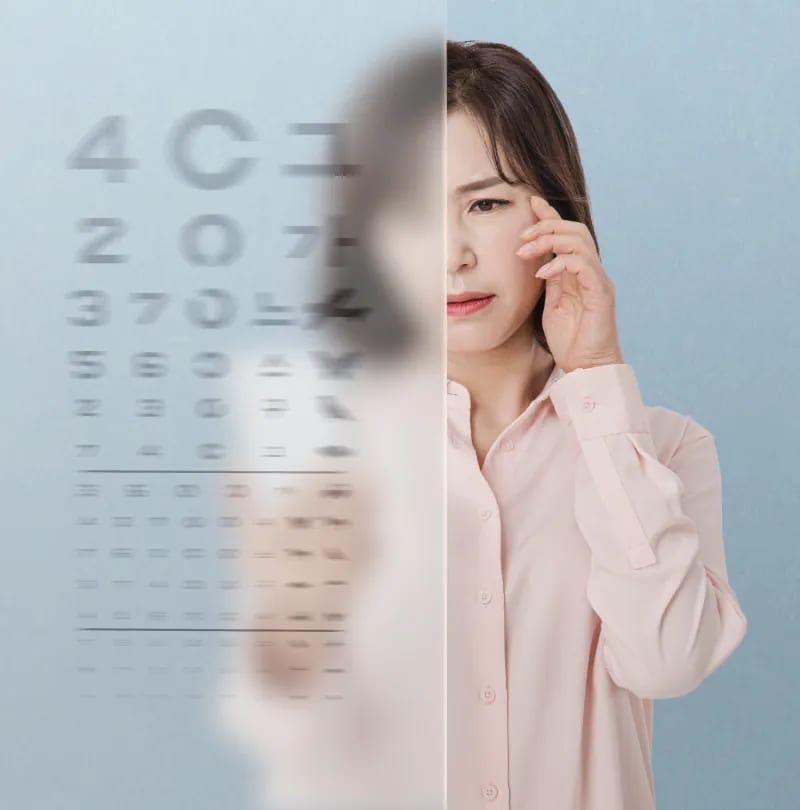
Same age, different problem in the lens
Presbyopia blurs what is close because the lens loses its flexibility. A cataract dims everything because the lens itself turns cloudy. Both start in the lens, but they are different conditions.
Because the two can feel alike, an eye exam is the only reliable way to know which one you have.
Presbyopia is an age-related loss of the eye’s focusing power. When it begins depends on your refractive status, but focusing ability generally starts to drop in the early 40s and has almost gone by the late 50s.
| Normal eye | Presbyopia | Cataract | |
|---|---|---|---|
| The lens | Contracts and relaxes as it should | Loses elasticity, so focusing weakens | Turns cloudy |
| What you see | Near objects are clear | Near objects blur | The whole view looks hazy |
Cataracts come to everyone with age. They are found in about 70% of people in their 60s, 90% in their 70s and nearly everyone over 80.
Everything looks dim and hazy. It progresses slowly, so it is easy to miss at first.
Objects look doubled even with the other eye closed.
Sunlight, headlights and fluorescent lamps make you squint and feel irritated.
White things take on a yellow tint.
For a while you can read without reading glasses, but over time both near and far become difficult.
Vision drops in bright places, and you may see better at night than in daylight.



The cloudy lens is removed and replaced with an artificial intraocular lens (IOL). Choosing that lens is an important decision, so the IOL guide is worth reading before your visit.
An opening of 2.8 mm or less is made at the edge of the eye, and viscoelastic material protects the tissue in the front chamber.
The upper part of the lens capsule is removed to reach the cloudy lens.
The cloudy lens is taken out of the capsule completely.
Viscoelastic material refills the capsule so the new lens can go in smoothly.
The intraocular lens is set inside the capsule.
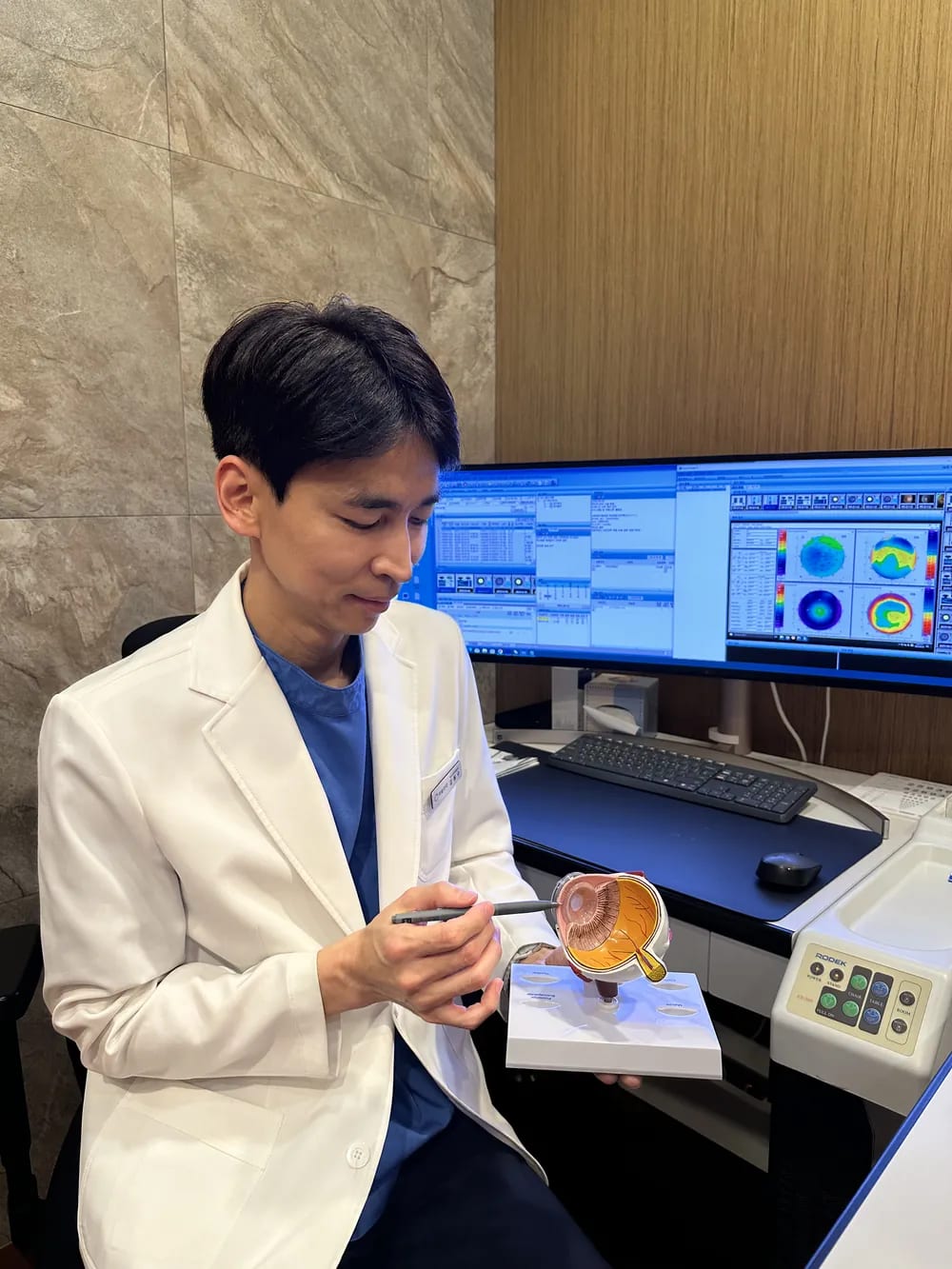
Surgery is preceded by a detailed exam, described in cataract tests and diagnosis. Care afterwards is set out in the before-and-after guide. To have your eyes checked, get in touch.
Focusing ability usually begins to fall in the early 40s and is nearly gone by the late 50s. The exact timing depends on your refractive status.
Presbyopia blurs near objects because the lens loses elasticity. A cataract makes everything hazy because the lens is cloudy. They are hard to separate yourself, so an eye exam is the way to know.
Hazy vision, double images in one eye, glare, whites looking yellow, a short spell of reading without glasses, and seeing better at night than in bright light.
2.8 mm or less, at the edge of the eye. The cloudy lens is removed and an intraocular lens is placed in the capsule.