





The cataract itself
How cloudy the lens has become and how it affects your sight.
Measure precisely first, then operate
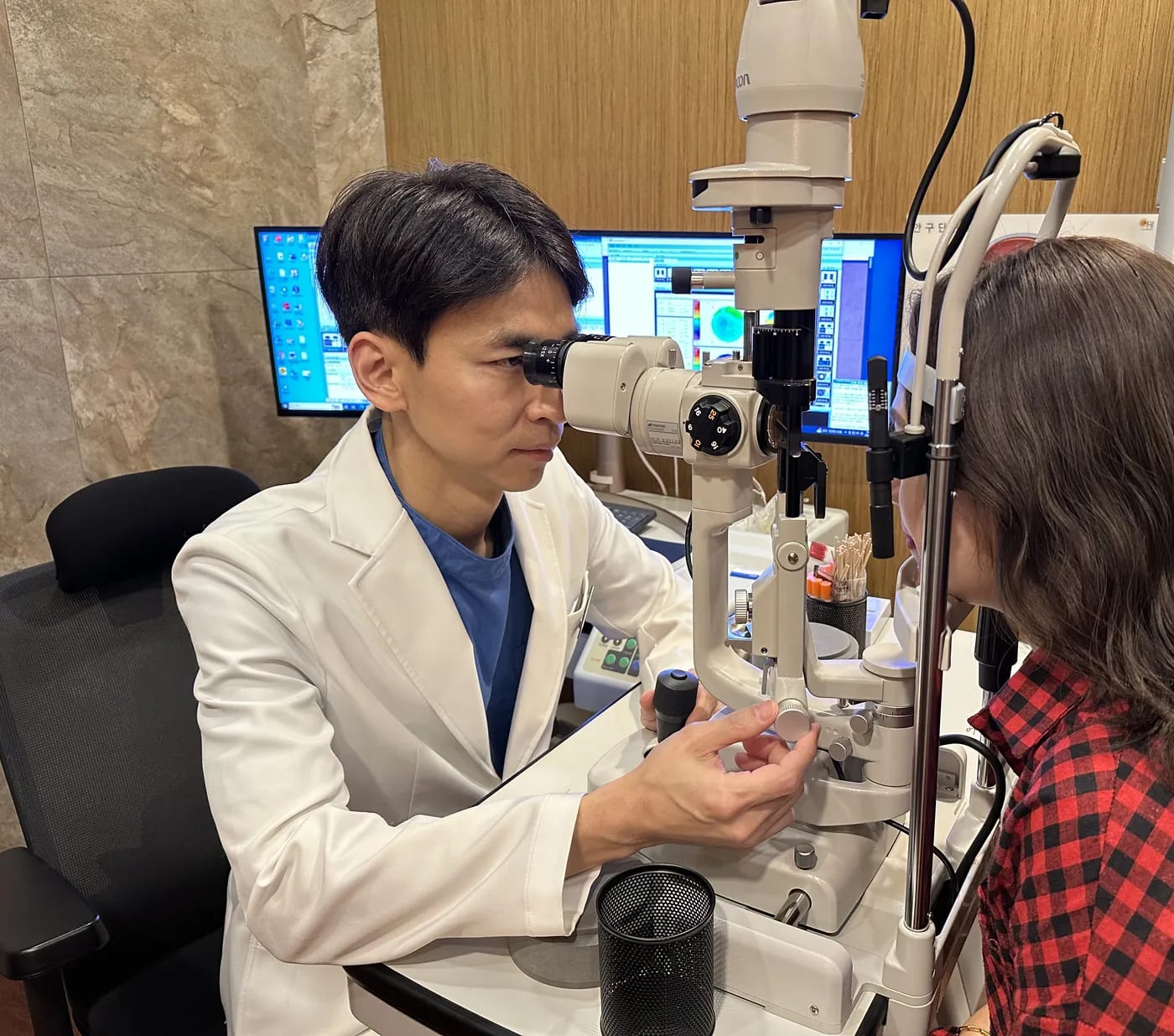
A cataract exam looks at the whole eye, from the cornea to the optic nerve, not only the cloudy lens. It finds other eye conditions and helps predict your vision after surgery.
Two things shape the result most: an accurate lens power measurement and a well-performed operation. Accurate measurement depends on both the device and the examiner’s experience.
How cloudy the lens has become and how it affects your sight.
Cornea through to optic nerve, checked for any other abnormality or complicated eye disease.
Findings that help predict how well you could see after surgery.
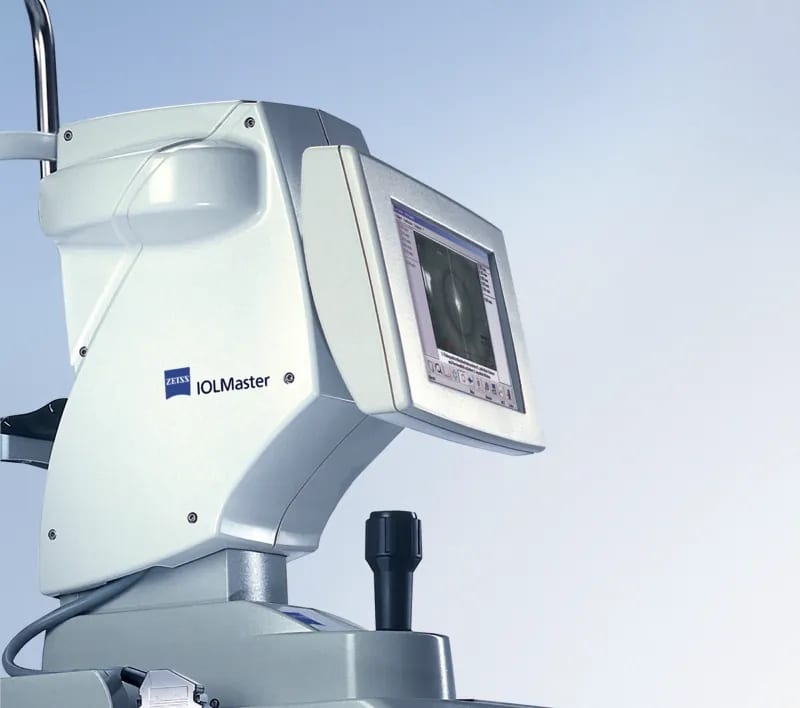
Lens power is measured with the IOL Master (Zeiss, Germany). It is a non-contact device, so nothing touches your eye, and it supports an accurate choice of lens power. That number feeds straight into the lens decision described in the IOL guide.
Other exam devices are used alongside it. You can see them on the equipment page.
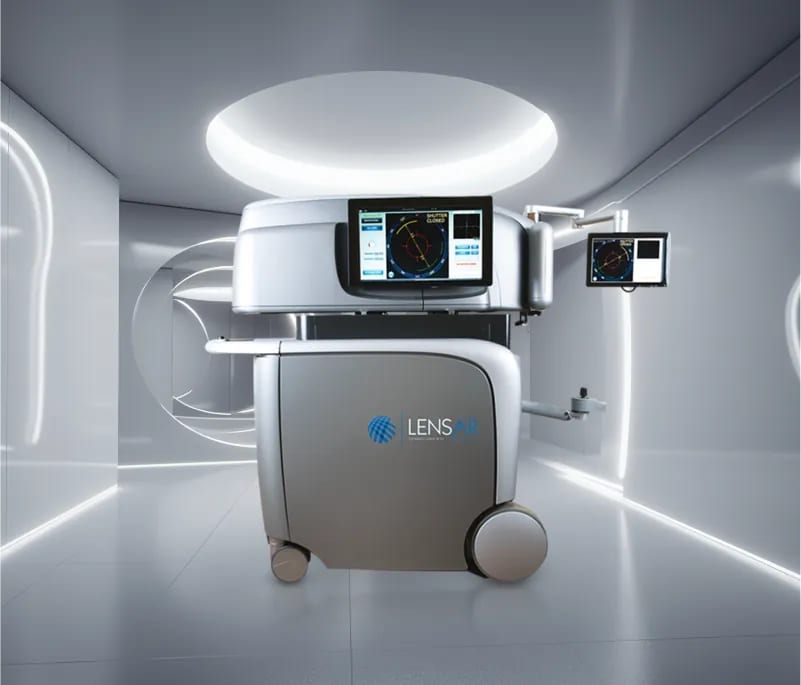
LENSAR is our system for laser-assisted cataract surgery. It captures the eye in 3D from 360 degrees, analyzes it, and plans an operation tailored to you.
A built-in sensor scans how dense your cataract is and rebuilds it in 3D automatically. The plan follows that density, with the aim of reducing damage to the lens.
Before the main step, the front of the lens capsule must be opened (capsulotomy). Done by hand, a uniform result is hard to count on. The laser cuts it as a precise circle, which helps the artificial lens sit more stably.
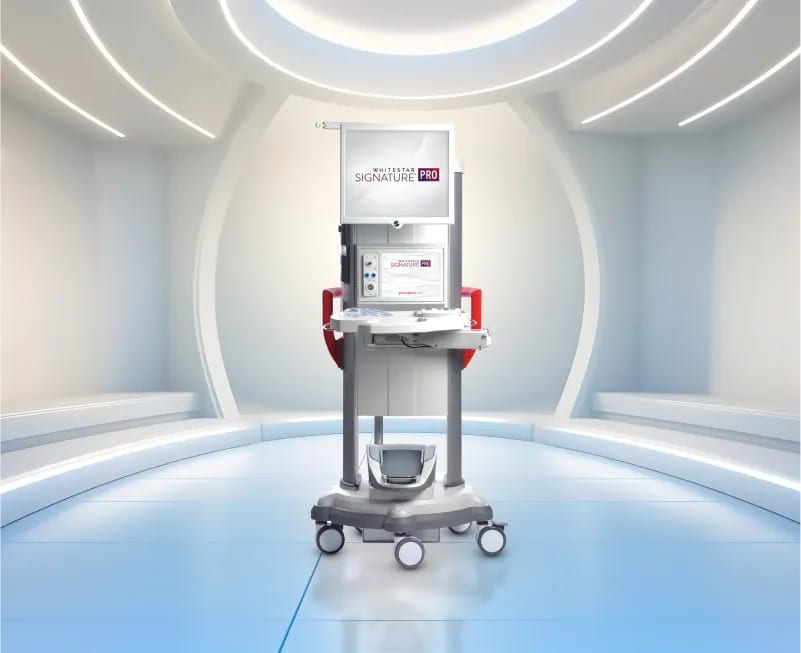
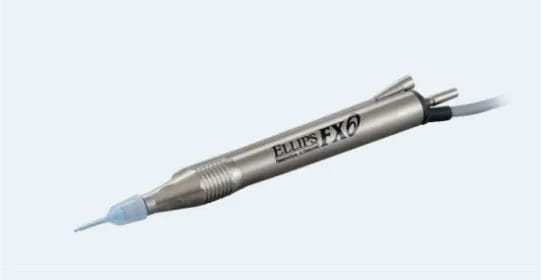
Signature Pro is an ultrasound cataract system with a dual pump, so the surgeon can change technique to suit your cataract. It uses artificial intelligence to keep the front chamber stable and control eye pressure during surgery, protecting the optic nerve and retina.
Uses less total energy, meaning less impact on the eye, less corneal swelling and quicker visual recovery.
Lets the surgeon switch method by cataract severity or pattern. Fast, accurate fluid control adds safety and shortens operating time.
Helps the lens be removed steadily.
Keeps heat damage at the incision to a minimum.
Cataracts that were once difficult to operate on can now be approached with this improved equipment.
There is no single default. Your surgeon picks the equipment that fits your eye, based on the findings of your exam.
Already noticing changes? Compare them with presbyopia and cataract symptoms. To see what recovery involves, read the before-and-after guide, or contact us to book an exam.
The cataract, plus the eye from cornea to optic nerve, to find other eye diseases and to predict your vision after surgery.
With the IOL Master (Zeiss, Germany), a non-contact device. Accurate lens power measurement is one of the most important factors in your result.
It scans the eye in 3D, gauges cataract density with its own sensor and plans a tailored operation. During capsulotomy it cuts the front capsule as a precise circle.
Its dual pump lets the surgeon adapt the method to each cataract, and ELLIPS FX uses less energy, which means less corneal swelling and quicker visual recovery.