





Collagen carries the load
Collagen makes up about 70% of the corneal stroma. It is what gives the cornea its elasticity and strength.
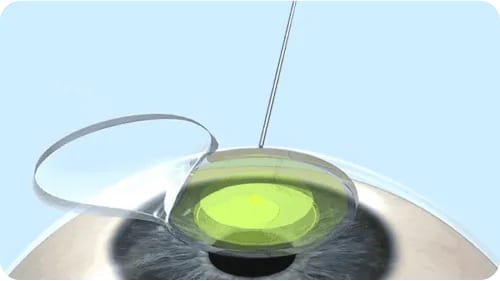
Firming up a cornea that is thin or weak
Corneal cross-linking strengthens the cornea by reinforcing its collagen fibres with riboflavin and UVA light. The goal is to help prevent corneal ectasia, the condition known as keratoconus.
Sky Eye Clinic in Seoul uses the Avedro system, both on its own and as an added step after laser vision correction.
Collagen makes up about 70% of the corneal stroma. It is what gives the cornea its elasticity and strength.
The treatment enriches the collagen fibres and strengthens the links between them. That mechanical reinforcement can help keep the cornea from bulging. The disease itself is covered on the keratoconus treatment page.
Riboflavin is the active ingredient. UVA light switches it on, and it also shields the cornea during treatment. The clinic uses VibeX-Xtra, a stronger solution with about 2.5 times the riboflavin compound concentration. It absorbs quickly, wipes away cleanly and helps the flap settle back into place.
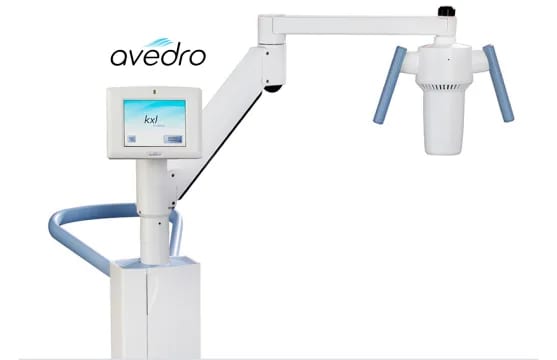
The Avedro KXL delivers 365nm UVA light for 90 seconds. It offers continuous or pulse mode, built-in calibration, a 92mm working distance and a touchscreen. It is listed on the equipment page.
Laser correction thins the cornea. The clinic adds cross-linking to reinforce it, a step that standard LASIK or LASEK does not include on its own.
Part of the stroma is reshaped, as in LASIK or LASEK.
The cross-linking solution is placed on the cornea and absorbed.
The surface is cleaned and the flap is laid back in place.
The Avedro KXL applies 365nm UVA for 90 seconds.
For keratoconus, cross-linking can be combined with Co-Wave to partly correct irregular astigmatism, and followed by an ICL lens implant.
Intacs are thin, crescent-shaped plastic rings placed inside the cornea. They flatten its shape, reduce irregularity, improve vision and make contact lenses easier to wear. Rings and cross-linking may be used at different stages of the disease. Costs are on the pricing page.
It enriches the collagen fibres in the stroma and strengthens the bonds between them. Riboflavin, activated by UVA light, drives the process.
The Avedro KXL delivers 365nm UVA light for 90 seconds.
People with a thin cornea, irregular topography, an eye-rubbing habit or atopic dermatitis, a family history of keratoconus, or hyperopia that tends to regress.
No. It can only be done when the cornea is thick enough.