





Usually nothing at first
Most early membranes cause no symptoms. A retinal scan during a routine eye exam can find one before your sight changes.
A thin film that bends straight lines
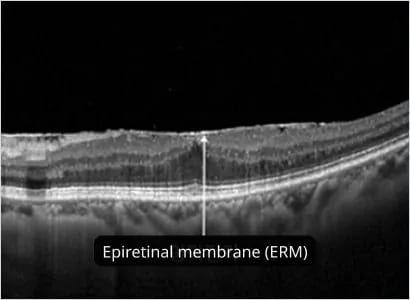
An epiretinal membrane is a thin film that forms on the front surface of the retina. As it pulls, the retina changes shape, so straight lines can look wavy or your sight can blur. At Sky Eye Clinic in Seoul, the retina team scans the retina, monitors mild cases and removes the membrane by vitrectomy when it harms your vision.
Not every membrane needs surgery. Timing depends on how severe it is and how it changes.
Cells and cellular matrix on the front of the retina come away from the nerve tissue and spread into a thin membrane. As it tightens, it can tug the retina out of shape.
Our Retina Center diagnoses and treats it.
Most early membranes cause no symptoms. A retinal scan during a routine eye exam can find one before your sight changes.
As it develops, sight can weaken or objects can look bent. How much depends on the membrane’s position and shape.
Your doctor follows the membrane over time and sets the timing of any treatment by how severe it is and how it progresses.
Surgery is recommended once the membrane reduces your vision, distorts it badly, or alters the retina’s structure.
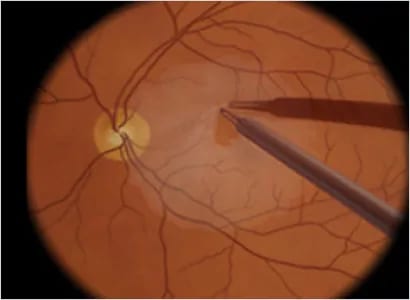
During vitrectomy the abnormal membrane is removed from the retinal surface.
Distortion can also come from macular degeneration, so an exam is how the two are told apart. If you live with uveitis or diabetes, the pages on uveitis and diabetic retinopathy explain those conditions.
Retinal surgery at the clinic uses the EVA Nexus vitrectomy system. Whether and when surgery makes sense is decided for each eye.
A thin membrane that forms when cells and cellular matrix on the front of the retina separate from the nerve tissue.
Often nothing at first. Later, vision may drop or objects may look bent.
No. Timing is set by watching how it progresses. Surgery is considered for vision loss, severe distortion or a change in the structure of the retina.
The exact cause is not known. It is linked to aging, uveitis, diabetes and high blood pressure, and rarely to retinal surgery or laser photocoagulation.